Introduction: Why Marketing Needs a Rethink
Marketing has never lacked tools, channels, or platforms. From CRMs and automation software to social media schedulers and AI content generators, businesses today are surrounded by technology. Yet, despite this abundance, many organizations struggle to achieve consistent growth, clarity, and customer trust.
The problem is not a lack of marketing activity—it is the absence of intentionality, systems, and human alignment. In many cases, marketing becomes copy-pasted, founder-dependent, or excessively tool-driven, losing its connection with real customer value.
Marketing needs to be reimagined—not as a set of tactics, but as a human-led, system-driven discipline amplified by AI.
The Core Philosophy
Marketing works best when it is human, intentional, system-driven, value-centric for the customer, and AI-empowered—not copy-pasted, founder-dependent, or tool-obsessed.
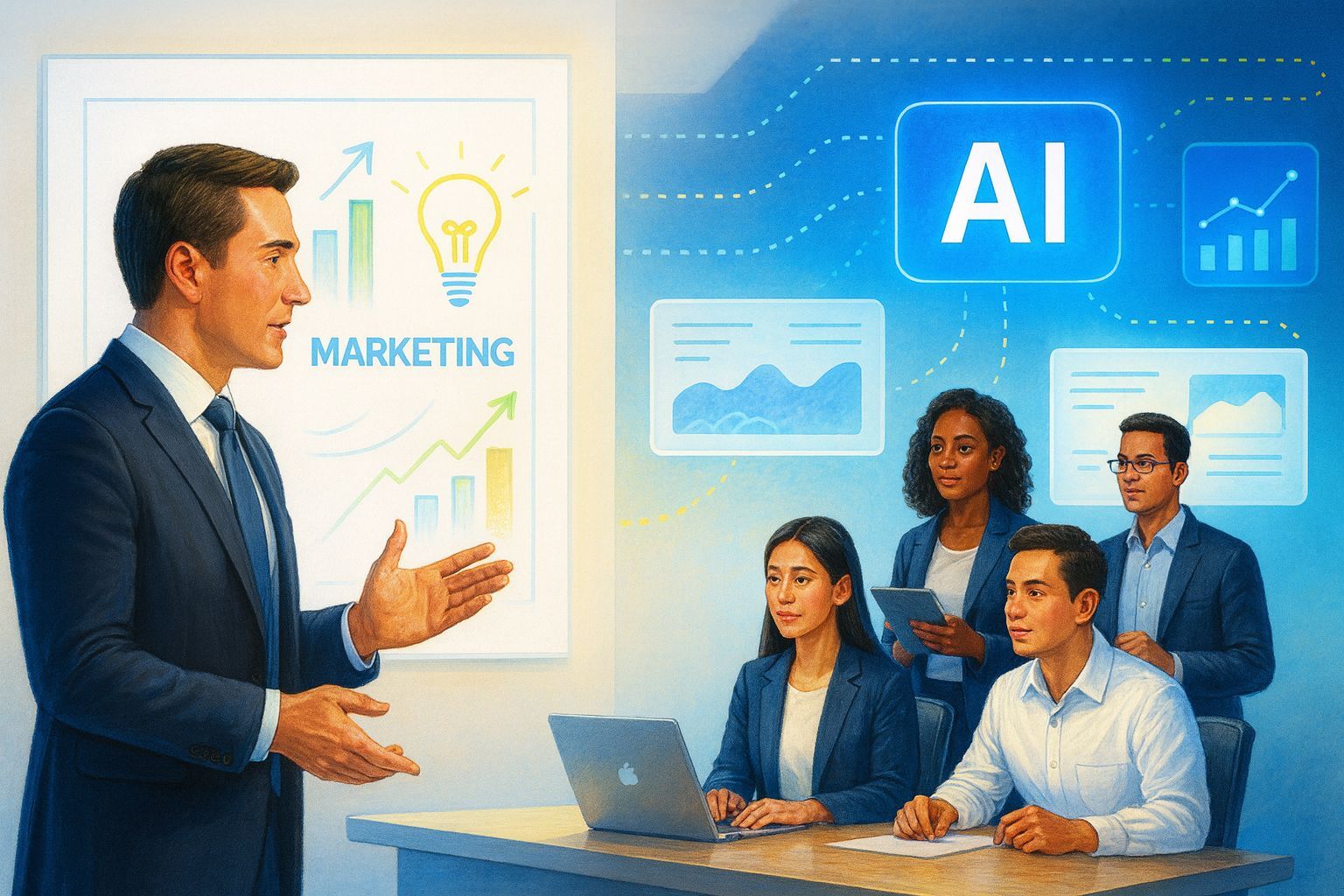
AI empowerment helps visualize ideas, translate thoughts into clear direction, and enables teams to execute faster, consistently, and without bottlenecks—ultimately driving sustainable growth.
This philosophy forms the foundation of scalable, resilient marketing organizations.
The Hidden Problem with Modern Marketing
Despite advanced tools, many businesses experience:
Founder dependency for every major decision
Inconsistent messaging across channels
High execution effort with low strategic clarity
Marketing teams overloaded with tasks but underpowered in outcomes
These challenges arise when marketing is treated as execution-first, rather than intent-first and system-led. Tools alone cannot fix structural and cultural gaps.
Human Intent: The Foundation of Effective Marketing
At its core, marketing is a human discipline. Customers respond not to automation, but to:
Clarity of purpose
Authentic intent
Alignment with their values and problems
When intent is unclear or purely transactional, even the most sophisticated campaigns fail to build trust. Human intent defines:
What problem the brand is solving
Why the solution matters
How the brand communicates consistently across touchpoints
Without this foundation, marketing becomes noise.
System-Driven Marketing: Moving Beyond Individuals
One of the most common bottlenecks in growing businesses is founder-led marketing. When every message, campaign, or decision depends on one individual, scale becomes impossible.
System-driven marketing focuses on:
Documented processes instead of ad-hoc actions
Clear ownership instead of constant supervision
Repeatable workflows instead of reactive execution
Systems convert marketing from a dependency into a capability—allowing teams to perform consistently, even in the absence of the founder.
Customer Value as the Central Axis
Marketing that does not create customer value eventually collapses under its own weight. Sustainable marketing answers three questions clearly:
What value does the customer receive?
How does this value improve their outcomes?
Why is this value credible and differentiated?
When customer value becomes the axis, messaging gains coherence, campaigns gain relevance, and trust compounds over time.
AI as an Empowerment Layer (Not a Replacement)
AI is often misunderstood as a replacement for human creativity or strategic thinking. In reality, its true power lies in empowerment.
AI acts as an enablement layer that:
Helps visualize ideas quickly
Converts abstract thoughts into structured direction
Accelerates execution without sacrificing intent
Reduces repetitive effort and operational friction
When used correctly, AI does not replace marketers—it amplifies their thinking and decision-making. It allows teams to:
Move faster with clarity
Maintain consistency across channels
Scale execution without increasing headcount
Reduce dependency on individuals
AI becomes a silent force multiplier, enabling marketing to grow in both speed and depth.
From Execution to Sustainable Growth
When marketing is human-led, system-driven, value-focused, and AI-empowered, the results extend beyond short-term campaigns:
Faster go-to-market cycles
Higher team ownership and accountability
Stronger brand trust
Predictable and sustainable growth
This approach transforms marketing from a cost center into a strategic growth engine.
Conclusion: Marketing as a Living System
Marketing is not a one-time activity or a collection of tools. It is a living system—driven by human intent, supported by structured processes, centered on customer value, and empowered by AI.
Organizations that embrace this shift move beyond chaos and dependency. They build marketing systems that think, execute, and evolve, even as the business scales.
The future of marketing belongs not to those who use the most tools—but to those who design the most intentional systems.