Image Understanding

Image Understanding turns visual data into business decisions—at scale.
Detect Defects and Classify Objects Instantly (Image Classification)
Understand Environments Automatically for Better Decisions (Scene Recognition)
Differentiate Between Similar Products with High Precision (Fine-Grained Image Classification)
Automatically Label and Organize Visual Data at Scale (Image Tagging)
Convert Images into Meaningful Descriptions Automatically (Image Captioning)
Find Visually Similar Patterns, Products, or Defects Instantly (Image Similarity Detection)
Retrieve Relevant Images from Massive Data in Seconds (Image Retrieval)
Enable Search Using Images Instead of Text (Content-Based Image Search)
Understand Object Interactions for Deeper Insights (Visual Relationship Detection)
Evaluate Visual Quality to Select the Best Content (Image Aesthetic Assessment)
Identify Locations and Critical Assets from Images (Landmark Recognition)
Group and Organize Large Image Datasets Automatically (Image Clustering)
Detect Patterns, Trends, and Anomalies in Visual Data (Visual Pattern Recognition)
Structure Complex Visual Scenes into Actionable Data (Scene Graph Generation)
Ask Questions to Visual Data and Get Instant Answers(Visual Question Answering)
Industrial Use Case
Image Understanding transforms unstructured visual data into structured, decision-ready intelligence for industrial environments. By applying advanced computer vision techniques such as classification, pattern recognition, and scene analysis, we address key challenges in quality inspection, monitoring, and anomaly detection. Our approach integrates these capabilities into scalable, business-aligned systems, enabling a shift from manual processes to automated, data-driven operations with improved efficiency, accuracy, and speed.
Transportation & Mobility

- Image classification → Identify defective vs non-defective products
- Visual pattern recognition → Detect surface anomalies (cracks, scratches)
- Image clustering → Group defect types for root cause analysis
👉 Used for: Automated quality inspection systems
Manufacturing and Industrial Automation

- Scene recognition → Identify road, highway, junction environments
- Image tagging → Detect vehicles, pedestrians, traffic signals
- Image retrieval → Search incidents from large traffic datasets
👉 Used for: Traffic monitoring, smart mobility systems
Retail, Commerce and Logistics

- Fine-grained classification → Identify product variants (SKU-level)
- Image similarity detection → Find similar products (visual search)
- Content-based image search → Retrieve products using images
👉 Used for: Retail shelf analytics, e-commerce search
Healthcare & Life Sciences
Healthcare & Life Sciences
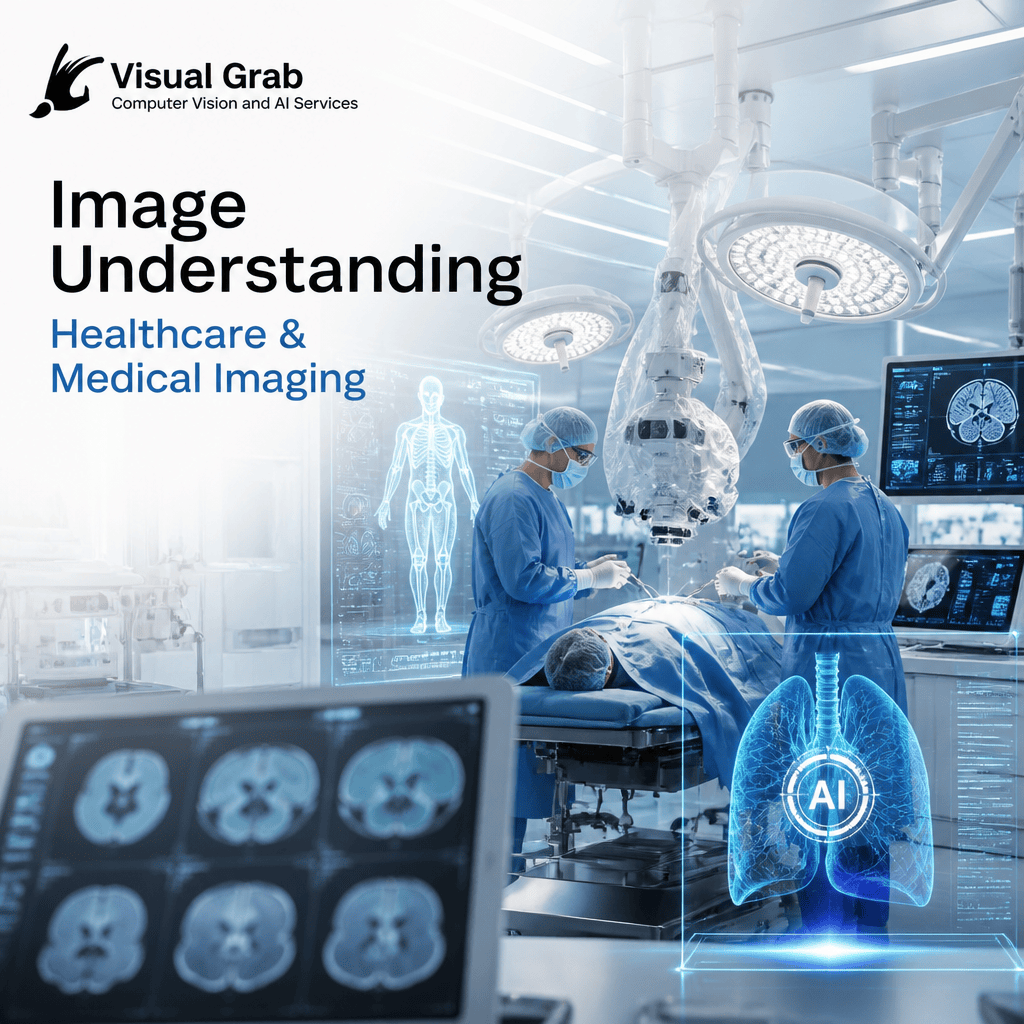
- Image classification → Detect normal vs abnormal scans
- Visual relationship detection → Understand organ/tissue relationships
- Image captioning → Generate automated medical summaries
👉 Used for: Diagnostic assistance and reporting systems
Agriculture & Environmental Monitoring
Agriculture & Environmental Monitoring
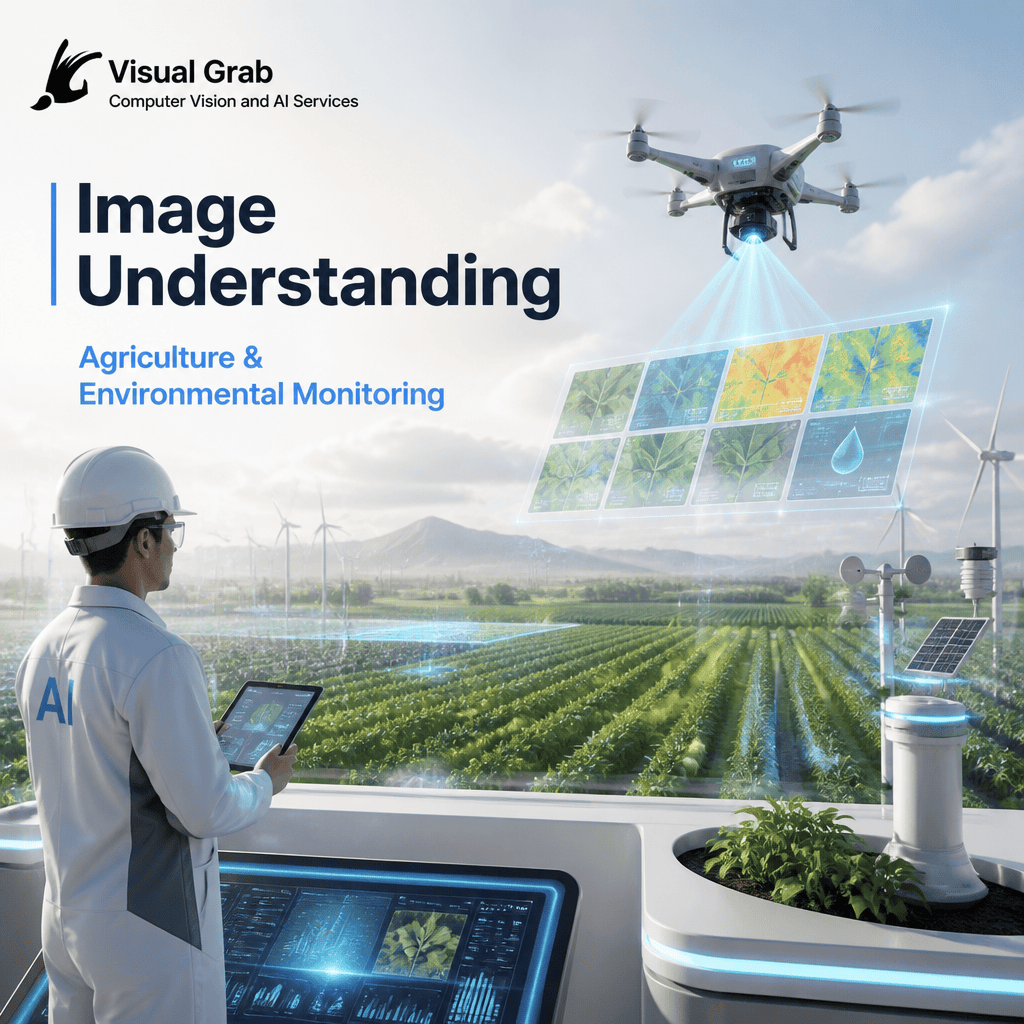
- Scene recognition → Identify farm conditions, crop types
- Image tagging → Detect disease patterns on leaves
- Image clustering → Group crop health conditions
👉 Used for: Precision agriculture and yield monitoring
Infrastructure & Smart Cities

- Scene graph generation → Understand relationships in urban scenes
- Visual pattern recognition → Detect infrastructure damage
- Image retrieval → Track historical infrastructure changes
👉 Used for: City monitoring and infrastructure management
Media, Sports & Entertainment

- Image classification → Identify threats vs normal activity
- Visual question answering → Query surveillance data (e.g., “Was there a person here?”)
- Landmark recognition → Identify sensitive locations
👉 Used for: Security monitoring and incident analysis
Security, Defense & Public Safety

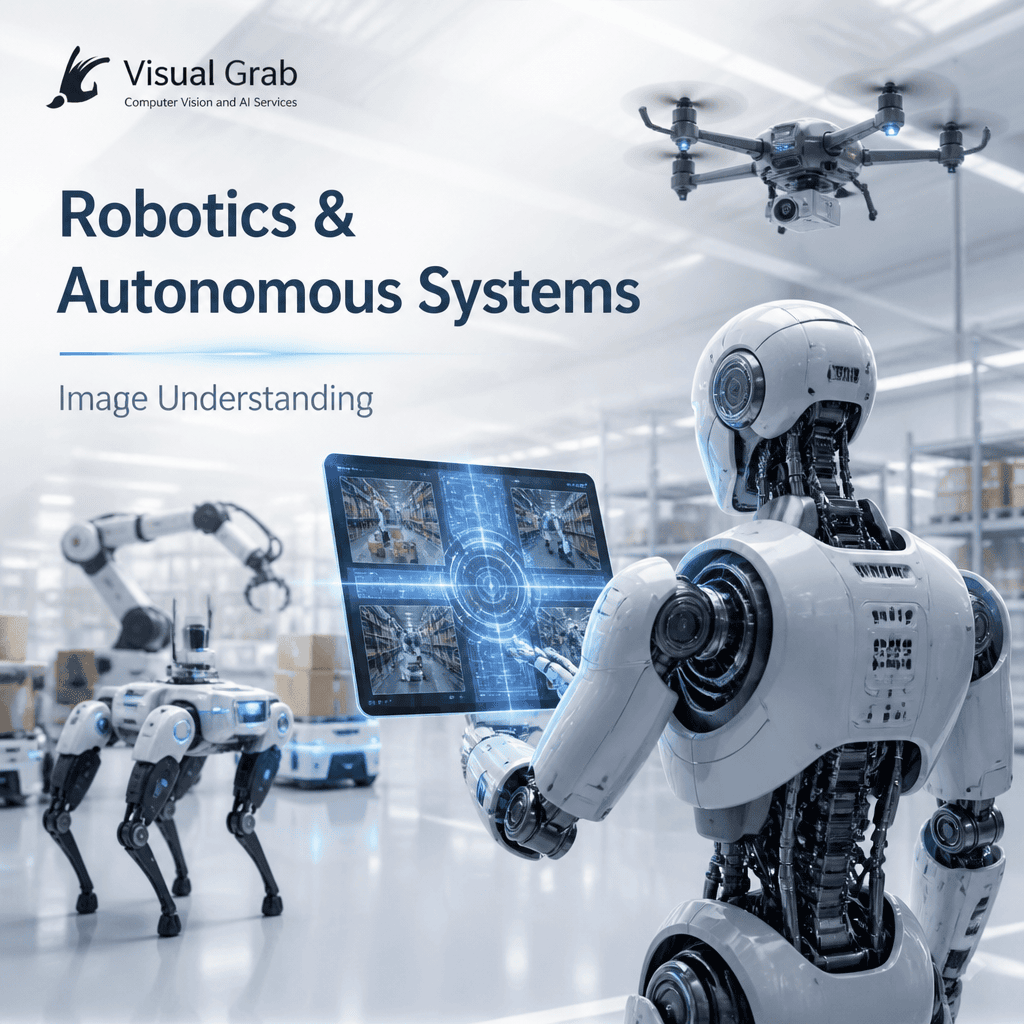
- Image understanding → Help robots interpret surroundings
- Scene graph generation → Understand object relationships
- Image captioning → Translate visual input into instructions
👉 Used for: Autonomous robots and warehouse automation
Robotics & Autonomous Systems
- Image tagging → Auto-tag content (players, objects, scenes)
- Image aesthetic assessment → Select best frames or shots
- Image retrieval → Search large media libraries
👉 Used for: Content management and sports analytics
Turn Your Visual Data into Business Decisions
Tell us your use case, and we’ll map how Image Understanding can improve your operations—whether it’s quality inspection, automation, or real-time insights.
What you’ll receive:
- A tailored solution approach
- Relevant industrial use cases
- Expected impact on efficiency and accuracy
👉 Get My Solution Blueprint
Used across manufacturing, retail, healthcare, and smart infrastructure use cases.