| 1 | Transform Visual Data into Machine-Readable Intelligence | Computer Vision Systems |
| 2 | Enable Machines to Perceive, Understand, Reason & Act | Vision Intelligence |
| 3 | Detect, Segment & Understand Objects at Pixel-Level Precision | Detection & Segmentation |
| 4 | Understand Motion, Behavior & Events Across Time | Video Intelligence |
| 5 | Reconstruct Depth, Geometry & Spatial Relationships in 3D | 3D Vision & Spatial AI |
| 6 | Enhance, Restore & Extract Signal from Complex Visual Data | Image Processing & Enhancement |
| 7 | Learn Complex Visual Representations at Scale | Deep Learning Vision Models |
| 8 | Generate, Reconstruct & Synthesize Visual Information | Generative Vision AI |
| 9 | Connect Vision with Language, Audio, Sensors & Context | Multimodal & Foundation Models |
| 10 | Turn Perception into Context-Aware Reasoning & Decisions | Applied Visual Intelligence |
Capability
Image Understanding
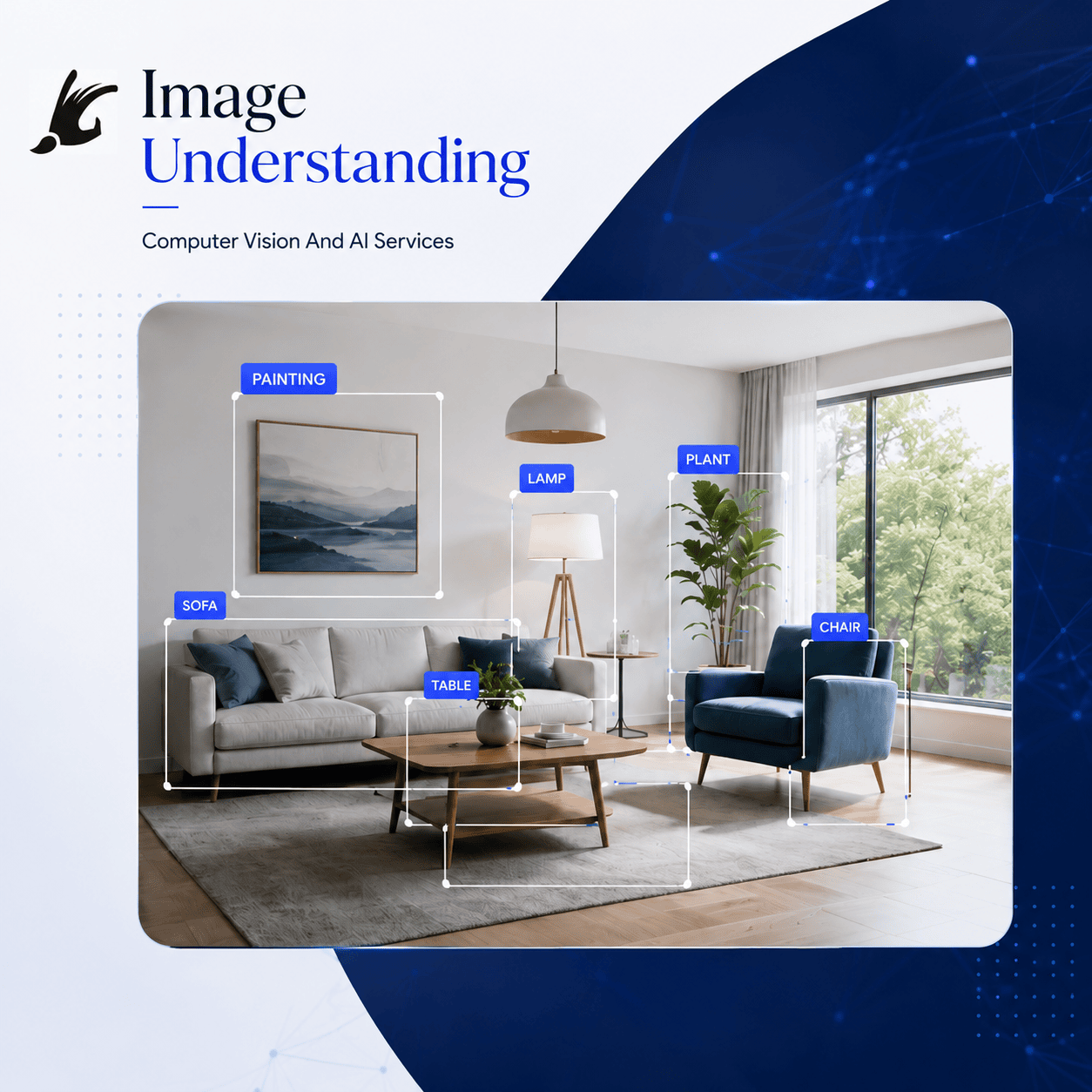
Image Understanding enables systems to interpret visual data by recognizing objects, scenes, and contextual relationships within images. It transforms unstructured visuals into structured information by classifying categories, identifying patterns, and organizing large-scale image datasets. This capability is foundational for making sense of visual environments, enabling faster analysis, better searchability, and improved decision-making across applications.
Object Detection and Segmentation
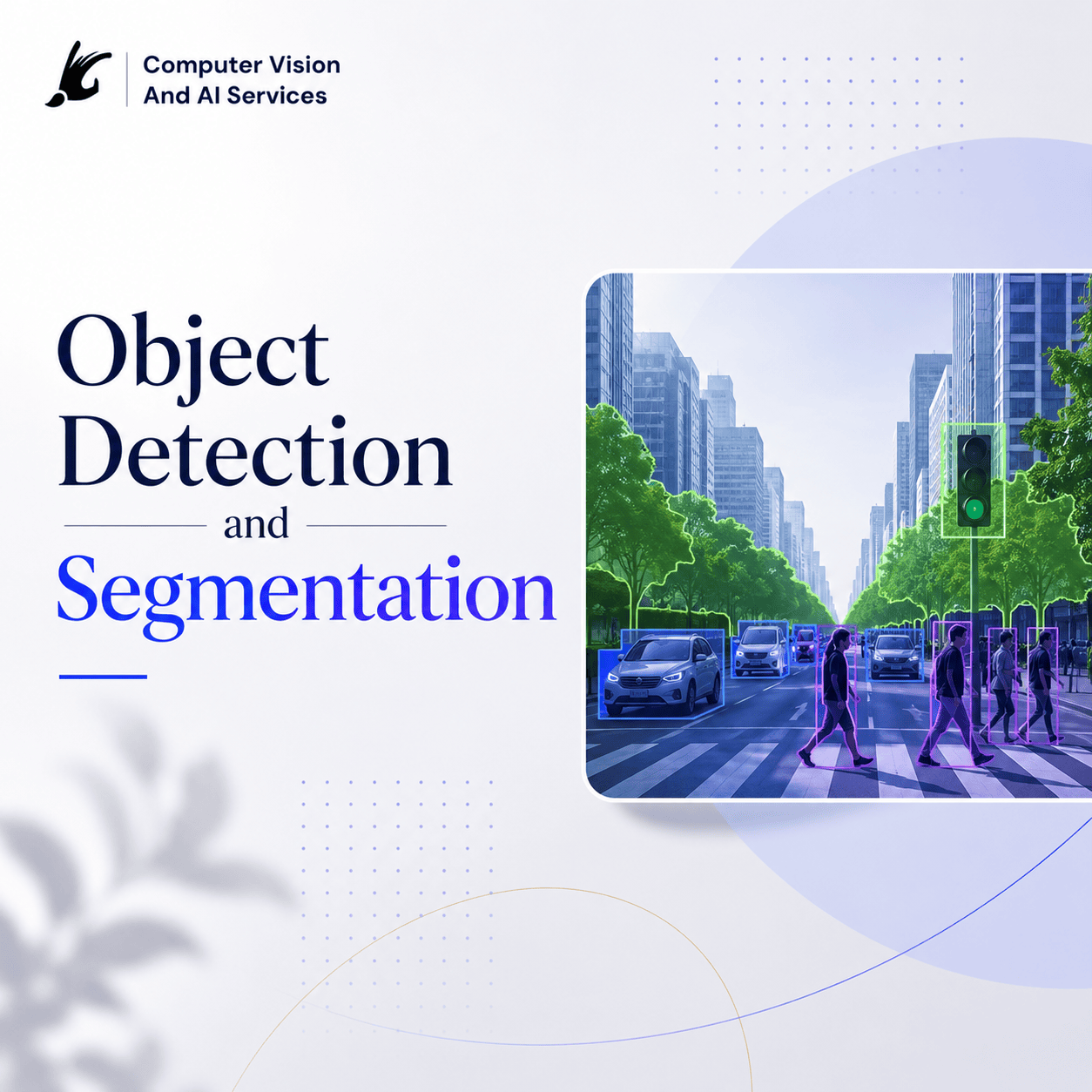
Object Detection and Segmentation focus on identifying and precisely locating elements within images and video. While detection highlights the presence and position of objects, segmentation goes deeper by defining exact boundaries and regions. Together, they enable systems to isolate, track, and analyze multiple entities in real time, forming the backbone of automation, monitoring, and interaction-driven applications.
Motion and Video Intelligence
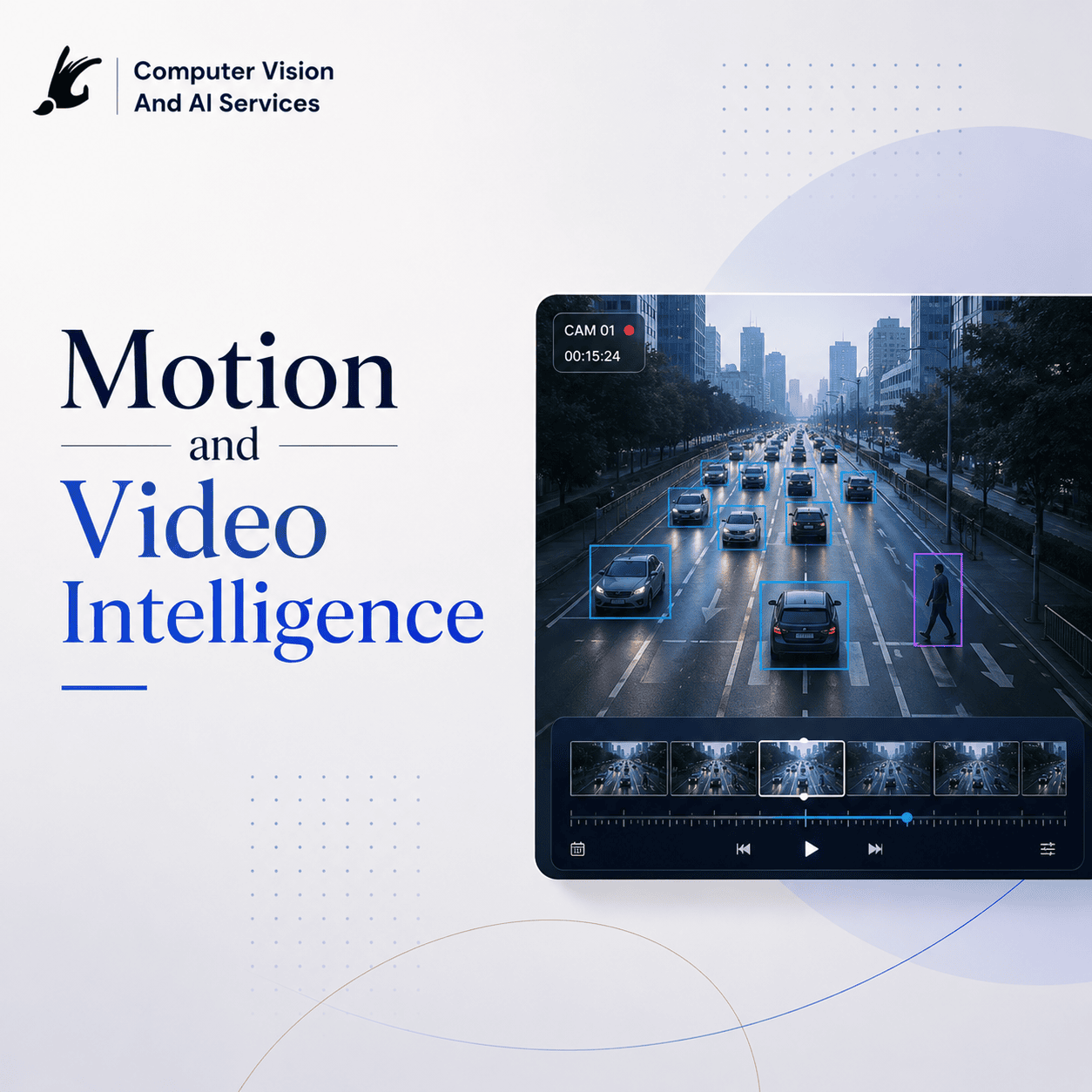
Motion and Video Intelligence extend visual understanding into the time dimension by analyzing how objects and scenes evolve across frames. This includes detecting movement, recognizing actions, and identifying patterns over time. By capturing temporal dynamics, this capability enables real-time monitoring, behavioral insights, and predictive event detection in complex and dynamic environments.
3D Vision and Spatial AI
3D Vision and Spatial AI
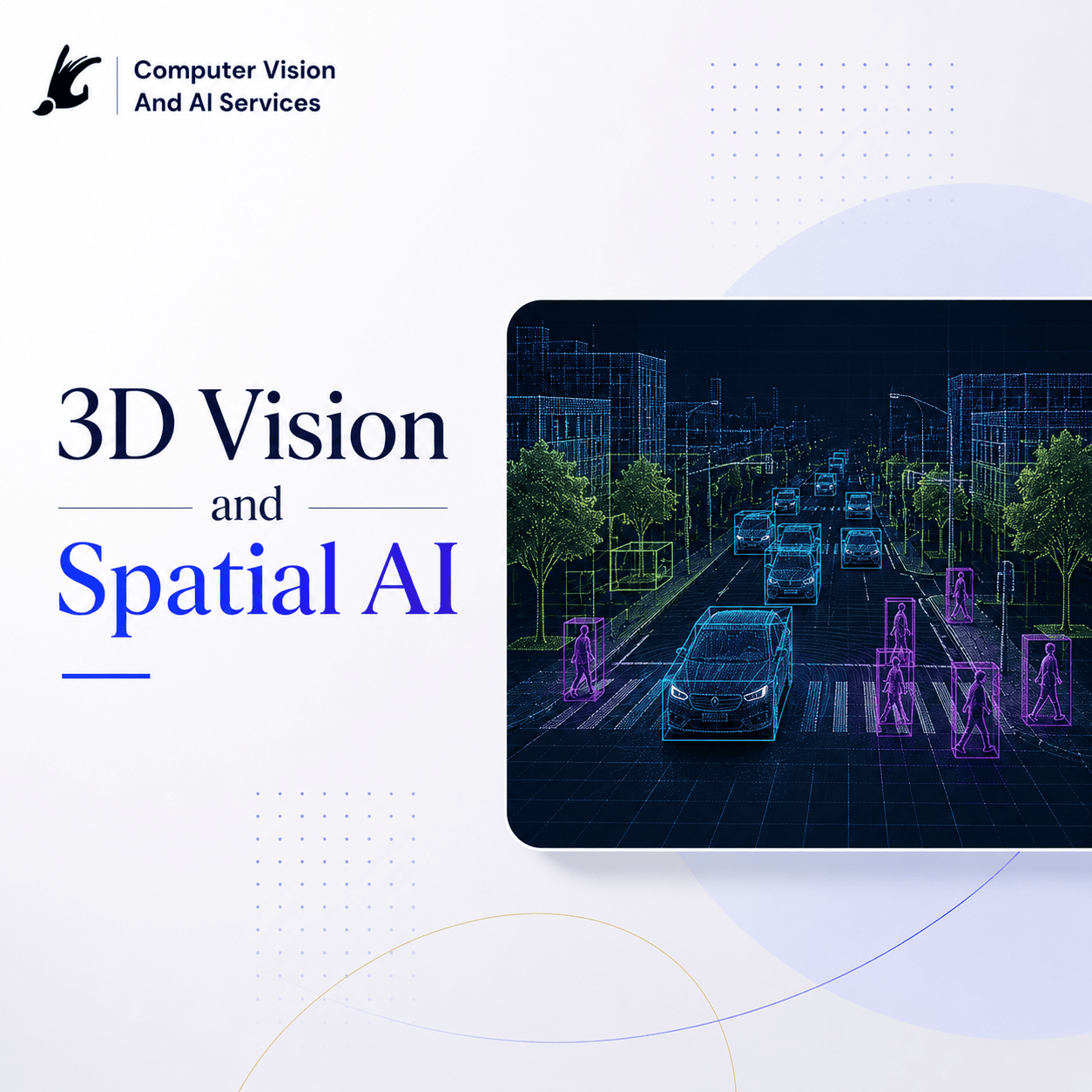
3D Vision and Spatial AI introduce depth perception and spatial awareness, allowing systems to understand the physical structure and geometry of the world. By reconstructing environments, estimating distances, and mapping spatial relationships, this capability enables accurate navigation, interaction, and decision-making in real-world scenarios, especially for autonomous systems and robotics.
Generative Vision AI
Generative Vision AI
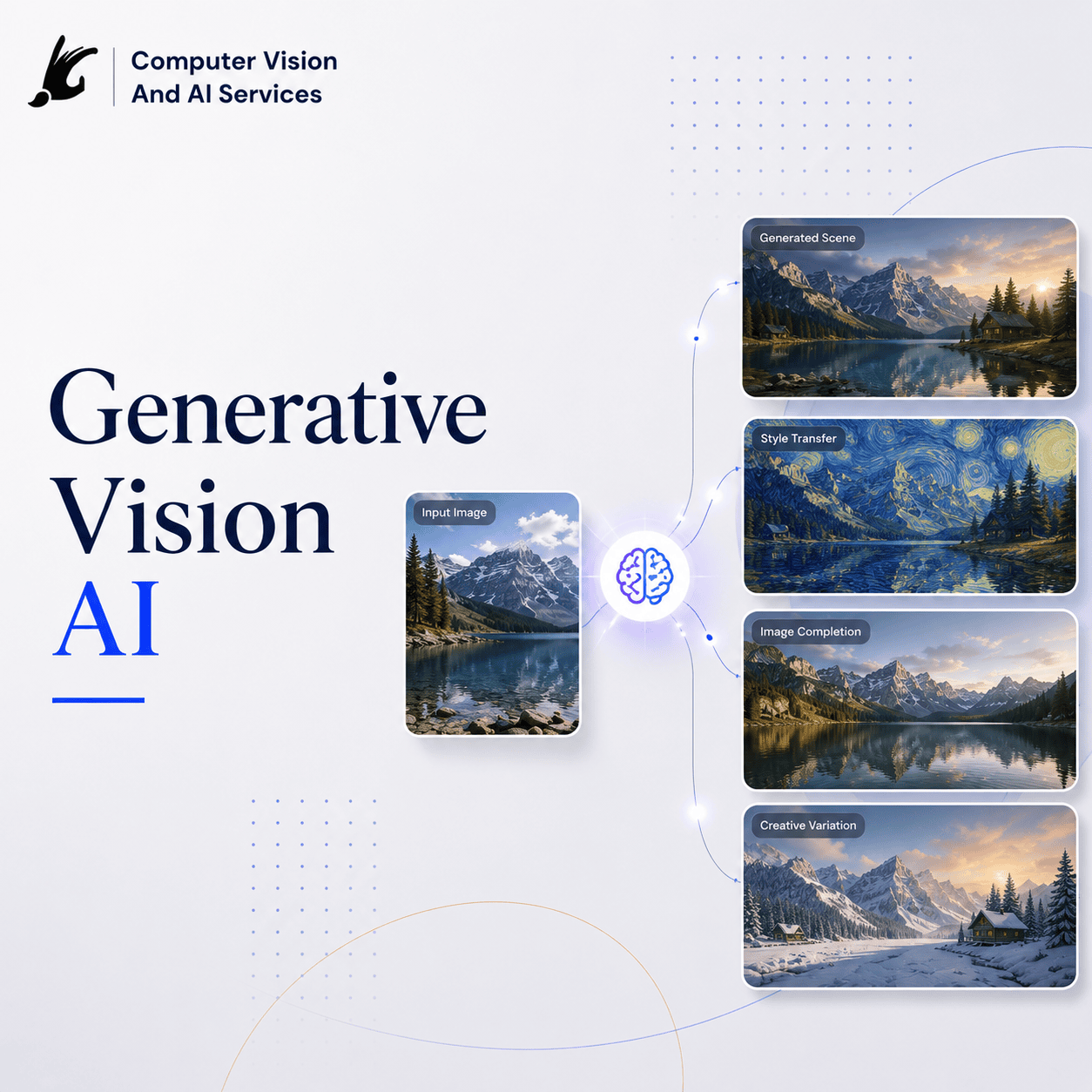
Generative Vision AI focuses on creating new visual data by learning patterns from existing datasets. It enables the generation of images, videos, and synthetic scenarios, helping simulate rare conditions, augment training data, and accelerate AI development. This capability not only supports model robustness but also unlocks new possibilities in content creation and innovation.
Image Processing and Enhancement
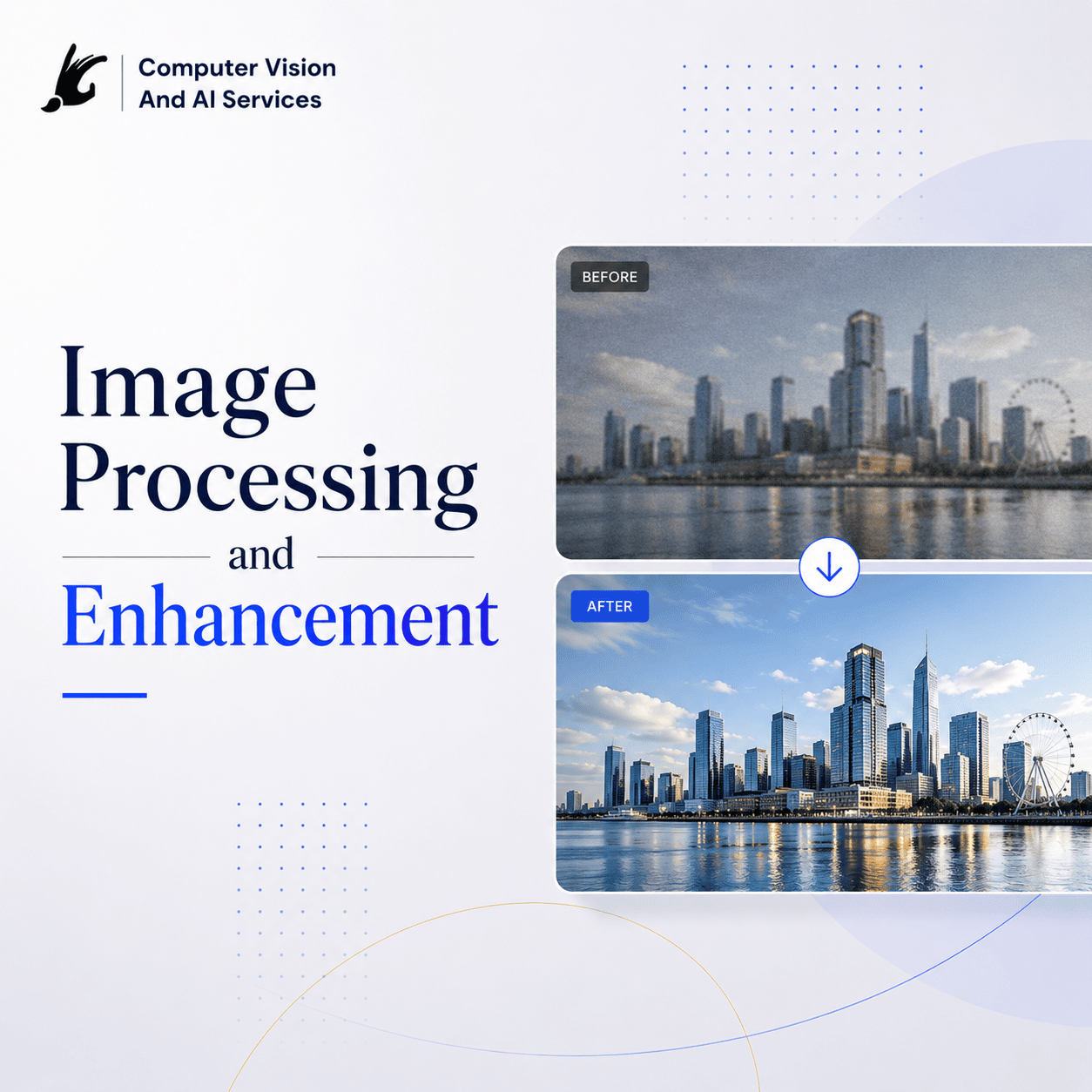
Image Processing and Enhancement ensure that visual inputs are clean, clear, and consistent before further analysis. By improving image quality through noise reduction, resolution enhancement, and normalization, this capability enhances the reliability of downstream models. It plays a critical role in making vision systems robust under varying environmental and operational conditions.
Classical Vision Algorithms
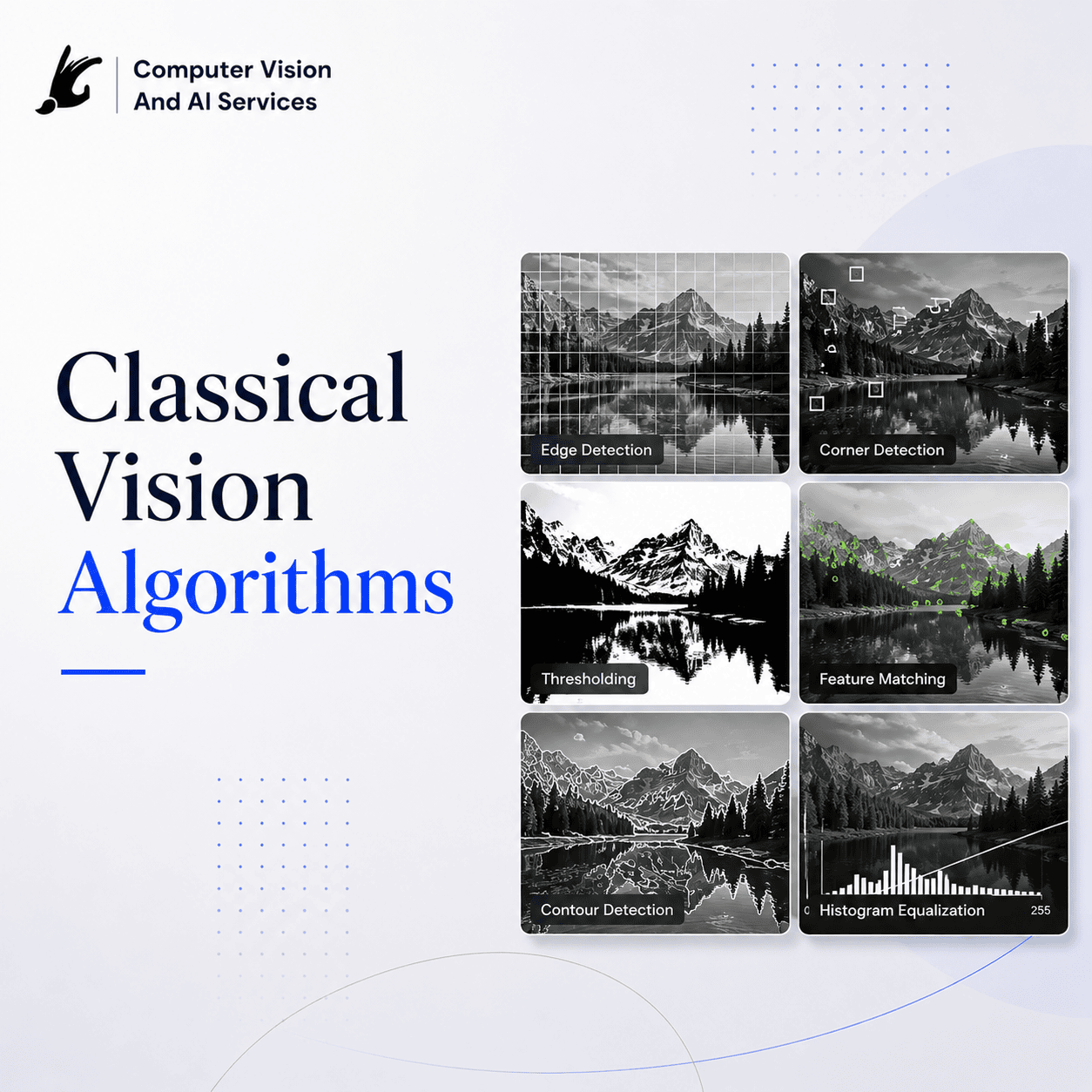
Classical Vision Algorithms rely on rule-based and mathematical techniques to extract meaningful features such as edges, corners, and shapes. These methods are fast, interpretable, and computationally efficient, making them ideal for real-time and resource-constrained applications. They often serve as the foundation or complement to modern AI-based approaches.
Deep Learning Vision Models
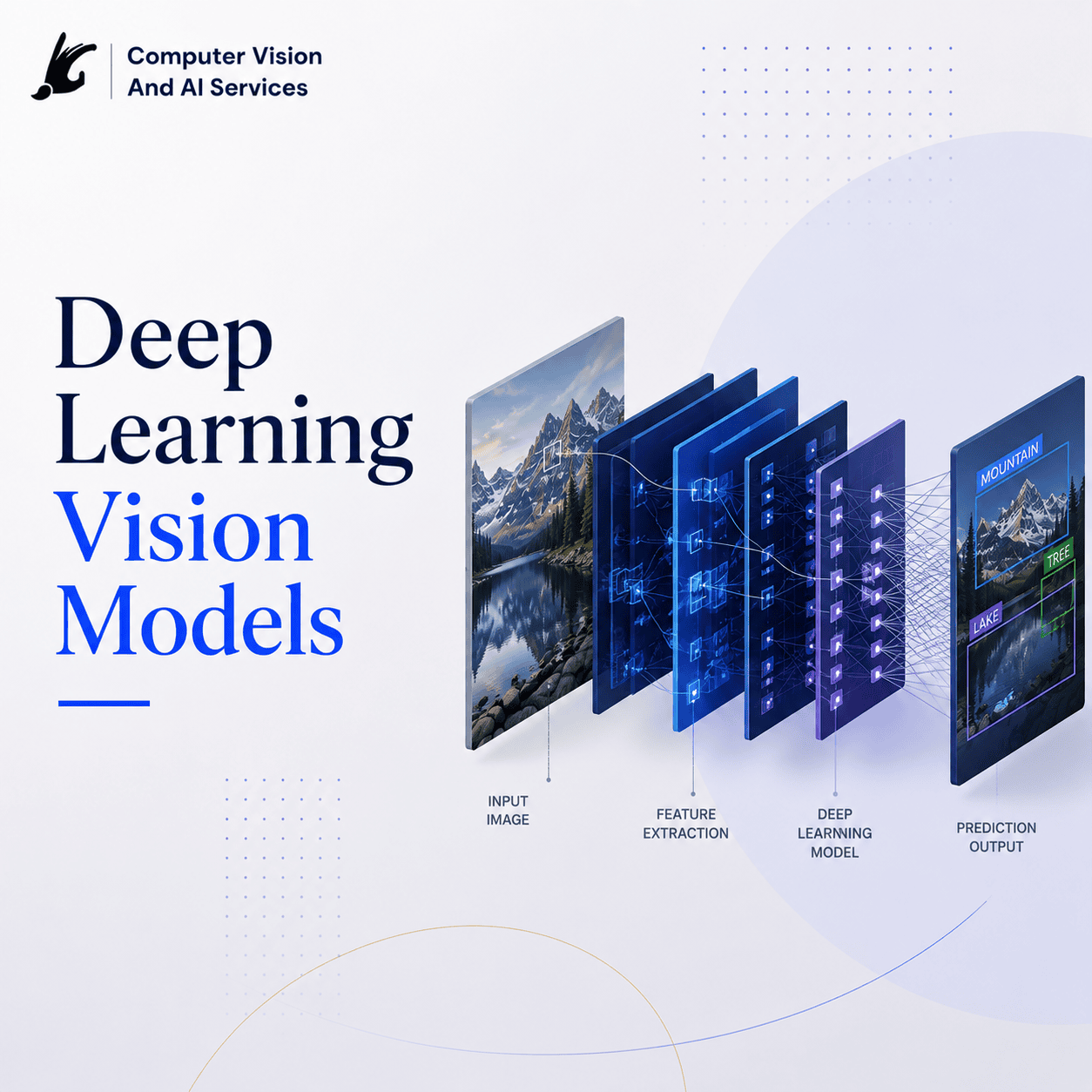
Deep Learning Vision Models use neural networks to automatically learn complex visual patterns from data. They enable high-accuracy tasks such as classification, detection, and segmentation by adapting to diverse scenarios and improving with more data. This capability powers scalable and intelligent vision systems that can handle real-world variability with precision.
Multimodal and Foundation Vision Models
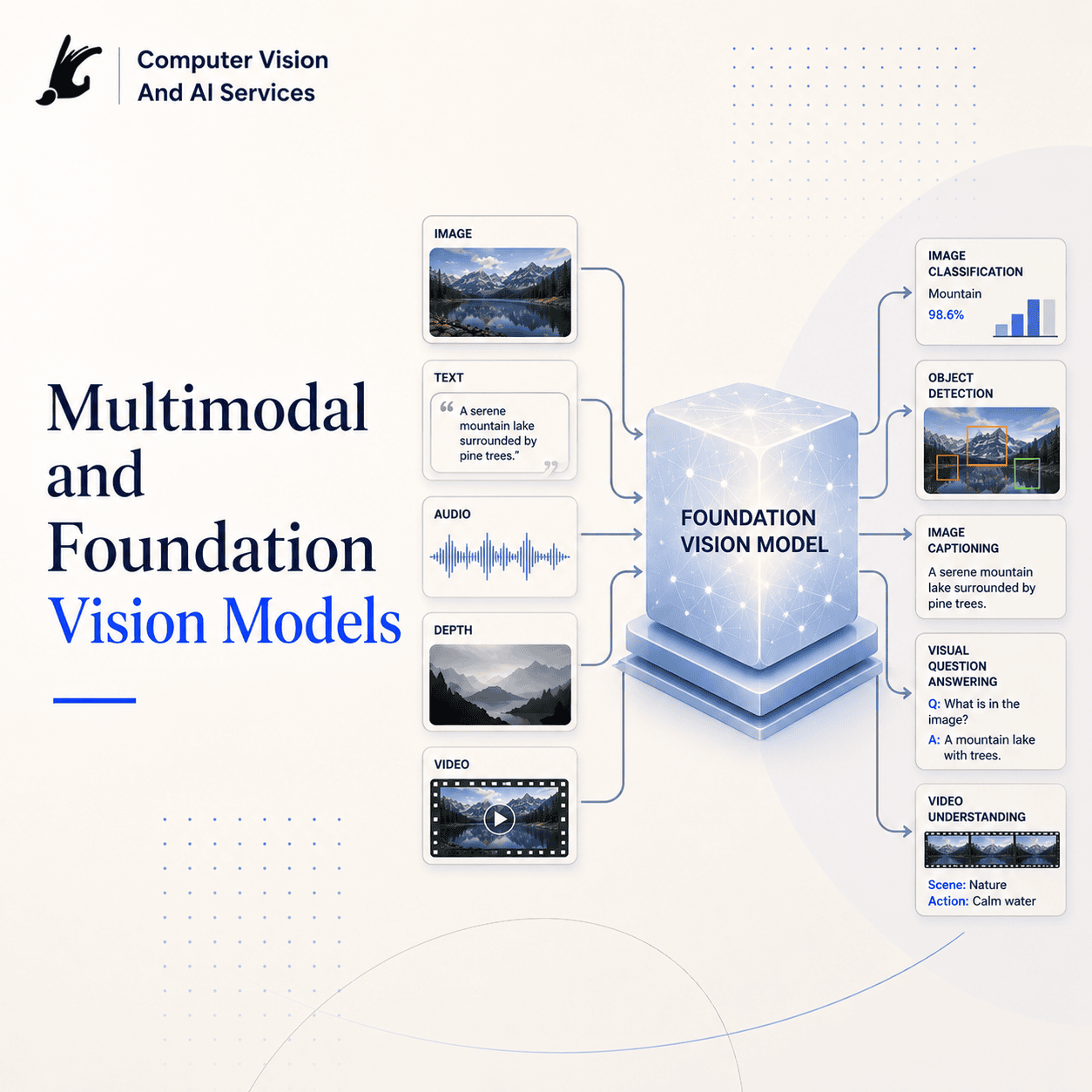
Multimodal and Foundation Vision AI combine visual data with other inputs such as text, audio, and sensor signals to enable deeper, context-aware understanding. These systems can reason across multiple data sources, generalize across tasks, and interact more naturally with humans. This represents the next evolution of AI, where vision becomes part of a unified intelligence layer driving complex decision-making.
Turn Computer Vision into Real-Time Business Decisions
Tell us your use case, and we’ll map how Computer Vision can transform your operations—whether it’s visual understanding, detection, automation, or intelligent monitoring.
What you’ll receive:
- A tailored computer vision solution approach
- Relevant industrial use cases aligned to your domain
- Expected impact on accuracy, efficiency, and decision-making
👉 Get My Computer Vision Solution Blueprint
Used across manufacturing, retail, healthcare, transportation, agriculture, and smart infrastructure for automated insights, real-time visibility, and scalable intelligence.