Generative Vision AI

Estimate Depth to Understand Real-World Distances → Depth Estimation
Infer Depth from a Single Camera Input → Monocular Depth Estimation
Perceive Depth Using Dual-Camera Systems → Stereo Vision
Reconstruct 3D Structure from Motion Across Frames → Structure from Motion
Understand Geometry from Multiple Viewpoints → Multi-View Geometry
Rebuild Real-World Scenes in 3D Digitally → 3D Reconstruction
Capture Complete Volumes for Detailed Spatial Analysis → Volumetric Reconstruction
Detect Objects in 3D Space with Precision → 3D Object Detection
Estimate Accurate Body and Object Orientation in 3D → 3D Pose Estimation
Understand Complex Environments in Three Dimensions → 3D Scene Understanding
Process and Analyze Spatial Data from Point Clouds → Point Cloud Processing
Render Realistic Scenes Using Neural Representations → Neural Radiance Fields
Generate High-Fidelity 3D Scenes Efficiently → Gaussian Splatting
Enable Real-Time Localization and Mapping → SLAM
Track Camera Movement Through Environments → Visual Odometry
Create Detailed Maps of Physical Spaces → Spatial Mapping
Combine LiDAR and Camera Data for Better Perception → LiDAR-Camera Fusion
Integrate Multiple Sensors for Robust Spatial Awareness → Sensor Fusion for Spatial Perception
Understand and Analyze Object Shapes in 3D Space → Shape Analysis
Industrial Use Case
Generative Vision AI for Industrial Use Case
Transportation & Mobility

Image generation → Create diverse traffic scenarios for simulation and testing
Video synthesis → Generate edge-case driving situations for validation
Synthetic data generation → Augment datasets for rare and critical events
👉 Used for: Training and validating autonomous driving systems
Manufacturing and Mobility

Image generation → Create defect variations for training inspection systems
Anomaly synthesis → Simulate rare production faults
Style transfer → Standardize visual appearance across inspection setups
👉 Used for: Improving quality control and defect detection accuracy
Retail, Commerce and Logistics

Product image generation → Create catalog visuals without physical shoots
Scene generation → Place products in multiple real-world contexts
Virtual try-on → Generate personalized product previews for customers
👉 Used for: Scalable content creation and enhanced customer experience
Healthcare & Life Sciences
Healthcare & Life Sciences
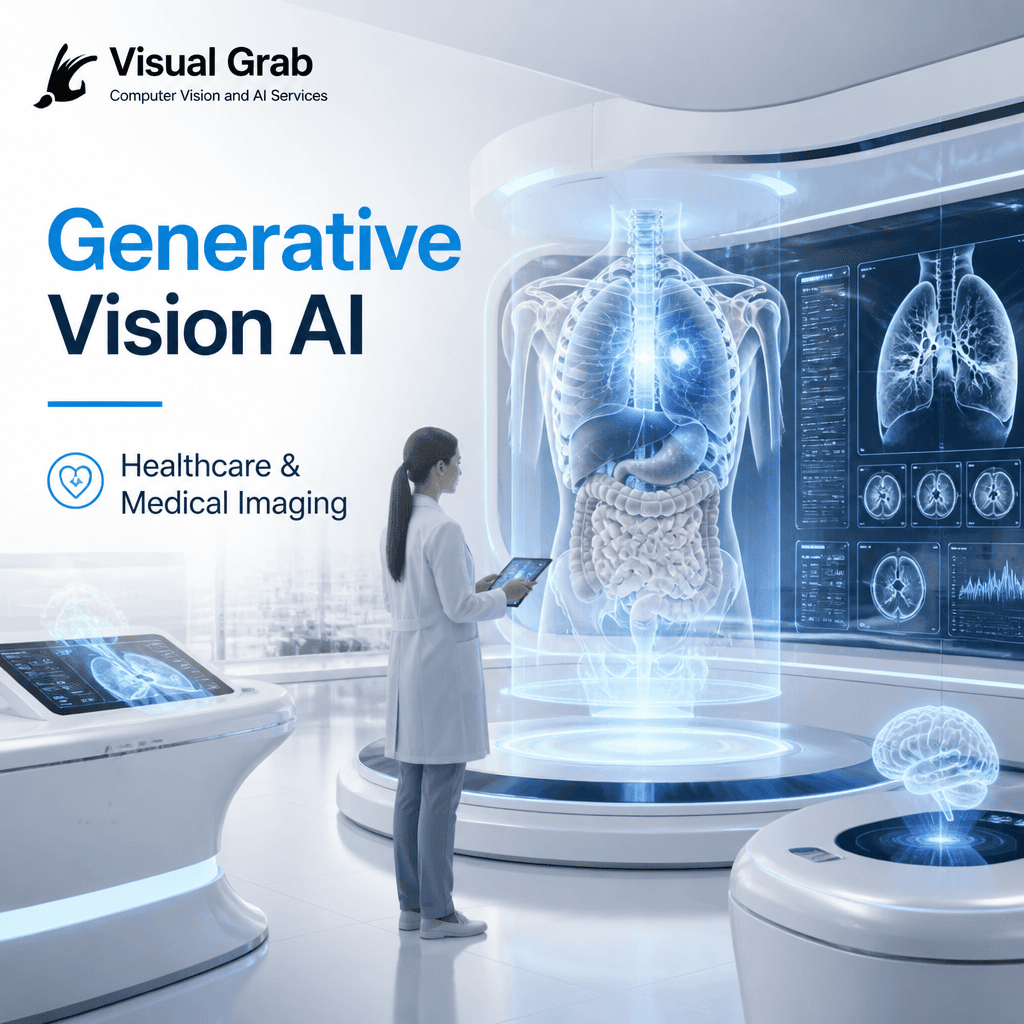
Medical image synthesis → Generate diverse datasets for rare conditions
Data augmentation → Improve robustness of diagnostic models
Image-to-image translation → Enhance or reconstruct medical scans
👉 Used for: Training AI models and improving diagnostic accuracy
Agriculture & Environmental Monitoring
Agriculture & Environmental Monitoring
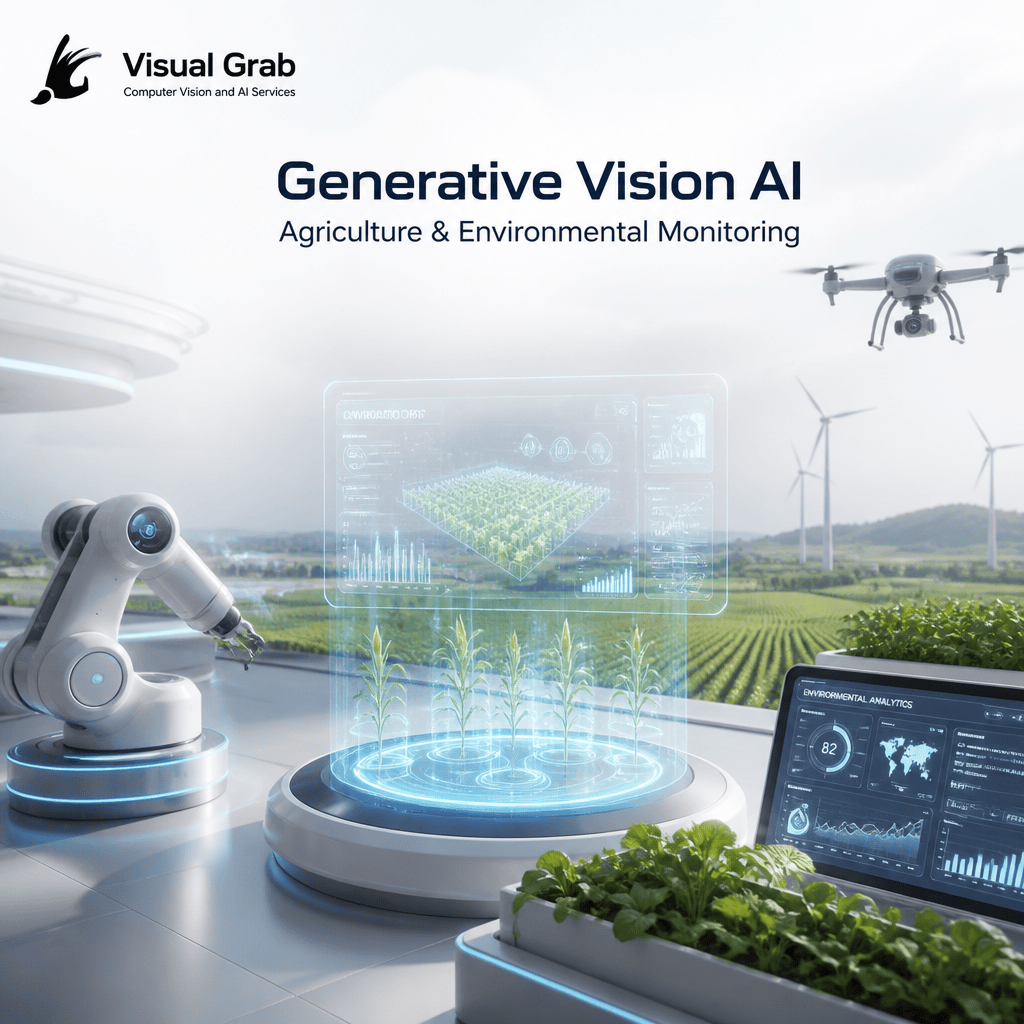
Image generation → Simulate crop conditions across seasons
Scenario synthesis → Model environmental changes and stress conditions
Data augmentation → Enhance training data for disease detection
👉 Used for: Predictive agriculture and environmental analysis
Infrastructure & Smart Cities

Scene generation → Create urban layouts and infrastructure simulations
Digital twin synthesis → Generate future state scenarios
Image enhancement → Improve visibility in low-quality surveillance data
👉 Used for: Urban planning and infrastructure simulation
Media, Sports & Entertainment

Image generation → Create high-quality visuals and creative assets
Video generation → Produce realistic animations and scenes
Style transfer → Apply artistic styles to content
👉 Used for: Content creation, VFX, and immersive storytelling
Security, Defense & Public Safety

Synthetic data generation → Create rare threat scenarios for training
Face generation → Simulate identities for system testing
Scene simulation → Model high-risk environments
👉 Used for: Training robust surveillance and defense systems
Robotics & Autonomous Systems

Simulation generation → Create virtual environments for robot training
Scenario synthesis → Model interaction with dynamic environments
Data augmentation → Improve perception models under varied conditions
👉 Used for: Training intelligent autonomous systems at scale
Turn Generative Vision AI into Real Business Impact
Tell us your use case, and we’ll map how Generative Vision AI can transform your operations—whether it’s content generation, design automation, synthetic data creation, or visual enhancement.
What you’ll receive:
- A tailored generative vision AI solution approach
- Relevant industrial use cases aligned to your domain
- Expected impact on creativity, speed, scalability, and cost efficiency
👉 Get My Generative Vision AI Solution Blueprint
Used across marketing, retail, media, healthcare, manufacturing, and design for scalable content creation, simulation, personalization, and intelligent visual generation.